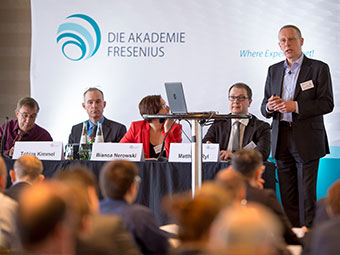
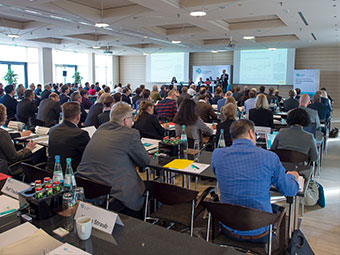
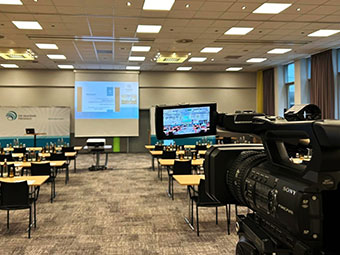
For many years, this conference has been the ideal platform for stakeholders in dietary risk assessment to meet, share expertise, and discuss regulatory and scientific developments. Benefit from expert presentations, practical insights, and networking opportunities in a professional, yet relaxed setting.
The risk assessment of pesticide residues in food is a central element of the EU regulatory framework for plant protection products. It involves complex steps, from data collection and evaluation to implementing new guidance and managing application and authorisation procedures. Staying up to date with the latest developments is essential.
Join this popular Akademie Fresenius Conference to receive comprehensive updates, exchange knowledge with peers, and take part in key discussions. The event offers the perfect environment for meaningful conversations – no crowds, just real dialogue. Many participants attend regularly. Secure your place for the upcoming edition!
The Conference will be taking place in Dusseldorf on 5 and 6 May 2026.
You can also follow all the exciting contributions via our Live Stream!
Please find all information on the virtual participation here.
Professionals working in the fields of:
Sectors taking part:
Picture Credit: © Visual Generation – iStock
PLEASE NOTE: The indicated times refer to Central European Summer Time CEST.
For further time zones, please view here.
Monika Bross, BASF, Germany
Britta Michalski, German Federal Institute for Risk Assessment (BfR), Germany
The presentation slots include sufficient time for questions and answers.
Sina-Elisabeth Ben Ali, Austrian Agency for Health and Food Safety (AGES), Austria
Daniela Marutzky, German Federal Office of Consumer Protection and Food Safety (BVL), Germany
Samira Ghaziani, knoell Germany, Germany
Amy Neill, Food Standards Agency, United Kingdom
Elizabeth Kells, Health and Safety Executive (HSE), United Kingdom
Thomas Kuhl, German Federal Institute for Risk Assessment (BfR), Germany
Angeliki Lysimachou, PAN Europe, Belgium
Adriana Torres de Sousa and Antonio Batista Sanches, Brazilian Health Regulatory Agency (ANVISA), Brazil (virtual)
Andreia Jardim, BASF, Brazil (virtual)
Michael Doherty, Exponent, United States of America
PLEASE NOTE: The indicated times refer to Central European Time Summer CEST.
For further time zones, please view here.
Monika Bross, BASF, Germany
Britta Michalski, German Federal Institute for Risk Assessment (BfR), Germany
Arno Kittelmann, German Federal Institute for Risk Assessment (BfR), Germany
Michaela Seiferlein, BASF, Germany, on behalf of CropLife Europe
Nicolas Breysse, French Agency for Food, Environmental and Occupational Health and Safety (ANSES), France
Jacob van Klaveren and Anne Zwartsen, National Institute for Public Health and the Environment (RIVM), The Netherlands
Ingo Großsteiner, Austrian Agency for Health and Food Safety (AGES), Austria
Claire Stephenson, ADAMA, United Kingdom on behalf of CropLife Europe
Folgende Referierende haben bereits zugesagt, weitere folgen in Kürze:
Name
Unternehmen

Sina-Elisabeth Ben Ali
Austrian Agency for Health and Food Safety (AGES), Austria
Sina-Elisabeth Ben Ali studied nutritional sciences at the University of Vienna. Since 2018, she has been working in the field of pesticide residues at AGES. She is involved in the assessment of plant protection products and active substances, as well as in the evaluation of MRL applications. Additionally, she has been participating in the Standing Committee on Pesticide Residues since 2021.
mehrweniger
Nicolas Breysse
French Agency for Food, Environmental and Occupational Health and Safety (ANSES), France
Nicolas Breysse is the Deputy Head of the team in charge of pesticide risk assessment for consumer safety in the Regulated Products Directorate of the French agency for food, environmental and occupational health safety, in which he started working in 2009. He is involved in the processes of active substances approbation, plant protection products registration and MRLs setting and review, as well as in working groups on the revision of guidelines (EU or OECD) for pesticide risk assessment for consumer safety.
mehrweniger
Monika Bross
BASF, Germany
Monika Bross is analytical chemist by training; she has been working at BASF Agricultural Center in Limburgerhof for more than 30 years. Within BASF she has been involved in the conduct of residue and metabolism studies, but also in dietary exposure assessments and the preparation of dossiers for international submissions. She is member of association expert teams dealing with residue related topics (including MRL setting) and the implementation of the EU Transparency Regulation.
mehrweniger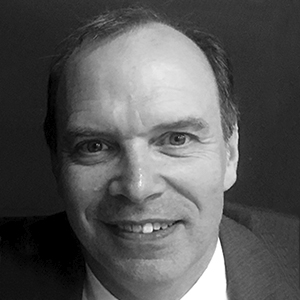
Michael Doherty
Exponent, United States of America
Michael Doherty’s professional career started with the Pesticide Degradation Laboratory in the USDA’s Agricultural Research Service, where he spent 13 years working on pesticide residue profiles in soil and environmental modeling. In 1997, Michael joined the EPA’s Office of Pesticide Programs’ Health Effects Division as a residue chemist and risk assessor. Over the years, his role in OPP transitioned to focus on international harmonization as a member of the OECD’s Residue Chemistry Expert Group and as a member of the FAO panel to the JMPR. After nearly 40 years with the US federal government, Michael retired from the EPA and joined Exponent as a senior managing scientist.
mehrweniger
Samira Ghaziani
knoell Germany, Germany
Samira Ghaziani is a scientist specialising in dietary safety, with over seven years of experience supporting applicants throughout the full lifecycle of dossier submissions, including active substance registration and renewal, MRL applications, import tolerance petitions, product re-registration, and post-submission follow-up. She has navigated the real-world challenges encountered during regulatory submissions, helping clients submit with confidence and in compliance. She holds a PhD in Agricultural Science from the University of Hohenheim, where her research focused on chemical compounds and agronomic parameters relevant to plant quality.
mehrweniger
Ingo Großsteiner
Austrian Agency for Health and Food Safety (AGES), Austria
Ingo Großsteiner studied nutrition and food science in Vienna. He is a highly experienced professional with over ten years of experience in various aspects of product and active substance safety, with an active interest in food safety and sustainable food systems and started working at AGES in 2014.
mehrwenigerAndreia Jardim
BASF, Brazil
Andreia Nunes Oliveira Jardim is a dietary risk assessment specialist with extensive experience in pesticide residues in food and consumer safety. She is currently part of the Consumer Safety team at BASF, where, since 2022, she has been responsible for dietary risk assessment, MRL proposals, GAP evaluations, and support on regulatory and trade‑related issues for Brazil and Latin America. Andreia has over 15 years of professional experience in pesticide residue analysis and dietary risk assessment, combining academic research, industry roles, and consultancy work. She holds a Bachelor’s degree in Chemistry, a Master’s degree in Chemistry, and a Ph.D. in Health Sciences, all from the University of Brasília. Her doctoral research focused on pesticide residues in food and exposure assessment using probabilistic models.
mehrweniger
Elizabeth Kells
Health and Safety Executive (HSE), United Kingdom
Elizabeth Kells is a Senior Regulatory Chemist at the UK Chemicals Regulation Division, where she leads on updating the UK consumer risk assessment models, as well as undertaking physical and chemical properties, maximum residue levels (MRLs) and consumer risk assessments of pesticides. She represents CRD at an international level on matters including pesticide analytical methods.
mehrweniger
Arno Kittelmann
German Federal Institute for Risk Assessment (BfR), Germany
Arno Kittelmann is a Food Technologist and has been working at the German Federal Institute for Risk Assessment (BfR) since 2017. He was involved in the development of the European database for processing factors and is currently finalizing his PhD thesis on a closely related topic. He is also a member of the OECD drafting group revising the processing documents.
mehrweniger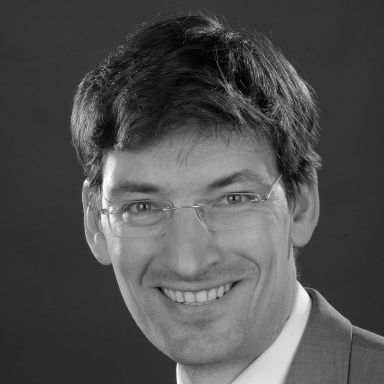
Thomas Kuhl
German Federal Institute for Risk Assessment (BfR), Germany
Thomas Kuhl is Senior Scientific Officer in the Pesticides Safety Department of BfR, Unit Residues and Analytical Methods, with a scientific background in agronomy, soil science and toxicology. He is a member of EFSA´s PPR Panel and various EFSA Working Groups as well as OECD MetaPath User Group.
mehrwenigerAngeliki Lysimachou
PAN Europe, Belgium
Daniela Marutzky
Geman Federal Office of Consumer Protection and Food Safety (BVL), Germany
Daniela Marutzky has been working for the Federal Office of Consumer Protection and Food Safety (BVL) since 2017. Her main tasks include the coordination and risk management of procedures for setting and reviewing maximum residue levels for active substances in plant protection products in accordance with Regulation (EC) No 396/2005. She is a chemist and a member of several international working groups, including the IUCLID sub-group of the Pesticide Steering Network. Her previous work included research in the field of polymer chemistry and the implementation of the provisions of the REACH Regulation (EC) No 1907/2006 in the chemical industry.
mehrweniger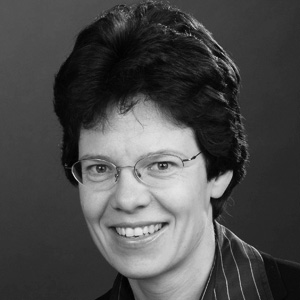
Britta Michalski
German Federal Institute for Risk Assessment (BfR), Germany
Britta Michalski is a chemist by training and has been working at the German Federal Institute for Risk Assessment (BfR) since 2004. She is Head of the Unit Residues and Analytical Methods in the Department Pesticides Safety. Her group is involved in MRL setting as well as approval and authorisation procedures for pesticides and biocides. Britta has been a member of the OECD’s Residue Chemistry Expert Group for more than 15 years and has recently co‑chaired the Writing Group responsible for updating the Test Guideline on Storage Stability. She has also led several EFSA projects in the area of pesticide residues and processing factors.
mehrweniger
Amy Neill
Food Standards Agency, United Kingdom
Amy Neill is a Team Leader in Dietary Exposure Assessment at the UK Food Standards Agency, where she focusses on dietary data collection, as well as consumption and exposure assessments to support food safety incidents and imported food risk assessments. Previously she worked at the UK Chemicals Regulation Division for many years, specialising in pesticide residues and consumer risk assessments.
mehrwenigerAntonio Batista Sanches
Brazilian Health Regulatory Agency (ANVISA), Brazil

Michaela Seiferlein
BASF, Germany
Michaela Seiferlein has a background in food chemistry and earned her PhD with studies on mycotoxins at the University of Würzburg. She joined BASF 25 years ago, initially working as a lab team leader for metabolism studies and monitoring livestock feeding studies. Over the years, her expertise has expanded to all areas relevant to consumer safety, including dietary risk assessment and MRL setting, with a particular focus on metabolite assessment and residue definitions. As a metabolism expert, she heads the competency centre for metabolism and residue definition within BASF. Michaela has been a member of the CLE Residue Definition subgroup since its foundation in 2014 and now serves as its head. She has also been actively involved in the revision of the OECD guidance document on residue definition as a member of the working group since 2018.
mehrweniger
Adriana Torres de Sousa
Brazilian Health Regulatory Agency (ANVISA), Brazil
Adriana Torres de Sousa is a Health Regulation Expert of the Brazilian Health Regulatory Agency (ANVISA) and, since 2017, she is manager of the Monitoring and Pesticide Risk Assessment Office, which is in charge of dietary and non-dietary health risk assessment of pesticide exposure, pesticide toxicological re-evaluation process and the Program on Pesticide Residue Analysis in Food (PARA). Adriana has been working for over 19 years on pesticide regulation. Adriana holds a Chemistry Degree, a Master’s degree in Inorganic Chemistry and a Postgraduate certificate in Toxicology Applied to Sanitary Surveillance.
mehrweniger
Claire Stephenson
ADAMA, United Kingdom
Claire L. Stephenson is a Senior Global Expert in residues and dietary exposure at ADAMA. Prior to this, she has worked both in consultancy and for the UK regulatory authority where she was the technical lead for MRLs. She has represented the UK as a technical expert at a range of EC and EFSA meetings and holds a PhD in biochemistry.
mehrweniger
Anne Zwartsen
National Institute for Public Health and the Environment (RIVM), The Netherlands
Anne Zwartsen studied in vitro neurotoxicology and kinetics at Utrecht University. Since joining RIVM in 2021, she has been working as an European registered toxicologist in the field of chemical food safety. In addition to aiming to include computational models describing kinetics in (future) risk assessments, Anne is coordinating the EFSA-RIVM partnership on the implementation of EC agreed-upon retrospective and prospective cumulative risk assessment methodology in the Monte Carlo Risk Assessment (MCRA) platform, and trains and supports governmental regulatory users in performing CRA.
mehrweniger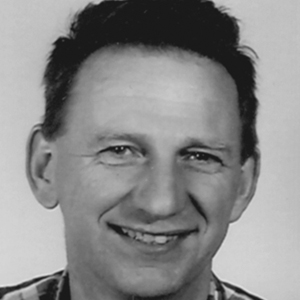
Jacob van Klaveren
National Institute for Public Health and the Environment (RIVM), The Netherlands
Jacob van Klaveren is coordinating the European funded project real-life mixtures granted under the Partnership of the Risk Assessment of Chemicals (PARC) and he is a member of the PARC Management Board responsible for innovation in regulatory risk assessment of chemicals in Europe. Since 2015, Jacob has been coordinating the EFSA-RIVM partnership on mixtures of pesticides. He coordinated the EU funded projects EuroMix and Acropolis in the period 2011-2020.
mehrwenigerWir haben für Sie im Veranstaltungshotel bis 4 Wochen vor Veranstaltungsbeginn ein begrenztes Zimmerkontingent reserviert. Bitte buchen Sie direkt beim Hotel und nennen Sie das Stichwort „Akademie Fresenius“.
Teilnahmepreis: € 1.995,00 zzgl. MwSt.
Im Teilnahmepreis sind folgende Leistungen enthalten:
Vertreter:innen einer Behörde oder einer öffentlichen Hochschule erhalten einen ermäßigten Teilnahmepreis von € 895,00 zzgl. MwSt. (Nachweis per Fax oder E-Mail erforderlich). Der Sonderpreis ist nicht mit anderen Rabatten kombinierbar.
Gruppenrabatt
Bei gemeinsamer Anmeldung aus einem Unternehmen erhalten die dritte und jede weitere Person 15 % Rabatt.
Buchen ohne Risiko
Eine kostenfreie Stornierung oder Umbuchung ist bis vier Wochen vor Veranstaltungsbeginn schriftlich möglich. Nach diesem Zeitpunkt und bis zu einer Woche vor Veranstaltungsbeginn erstatten wir Ihnen 50 % der Teilnahmegebühren. Bei späteren Stornierungen oder Nicht-Erscheinen können keine Teilnahmegebühren erstattet werden. Sie erhalten jedoch in diesem Fall von uns nach der Veranstaltung die Veranstaltungsdokumentation. Eine Ersatzperson können Sie jederzeit kostenfrei benennen.
Claudia Werner
Inhalt und Konzeption
+49 231 75896-83
cwerner@akademie-fresenius.de
Claudia Werner
Inhalt und Konzeption
+49 231 75896-83
cwerner@akademie-fresenius.de
Claudia Werner
Inhalt und Konzeption
+49 231 75896-83
cwerner@akademie-fresenius.de
Jennifer Zerth
Organisation und Teilnehmermanagement
+49 231 75896-79
jzerth@akademie-fresenius.de
Jennifer Zerth
Organisation und Teilnehmermanagement
+49 231 75896-79
jzerth@akademie-fresenius.de
Präsentieren Sie Ihr Unternehmen auf unserer Veranstaltung.
Persönlich und zielgruppengenau stellen Sie Ihre Produkte und Dienstleistungen vor. Gerne informieren wir Sie unverbindlich über die verschiedenen Möglichkeiten – von der Auslage von Produktinformationen bis hin zum Ausstellungsstand.
Gerne beraten wir Sie persönlich:
Monika Stratmann
Telefon: +49 231 75896-48
info@akademie-fresenius.de
Wir bieten Journalist:innen und Redakteur:innen eine Plattform, um in Kontakt mit Expert:innen zu treten.
Wenn Sie als Redakteur:in der Fachpresse Interesse an einem Pressepass oder einer Medienpartnerschaft haben, kontaktieren Sie uns bitte frühzeitig. Wir beraten Sie gerne.
Sprechen Sie uns an:

Katharina Geraridis
Telefon: +49 231 75896-67
presse@akademie-fresenius.de


Zertifiziert nach DIN EN ISO 9001 und DIN EN ISO 50001

Infos zu unseren aktuellen Veranstaltungen anfordern:
© Die Akademie Fresenius GmbH