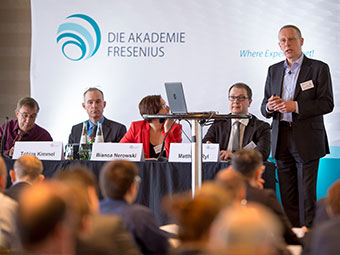
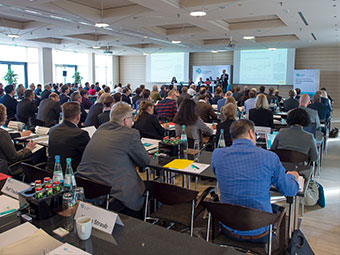
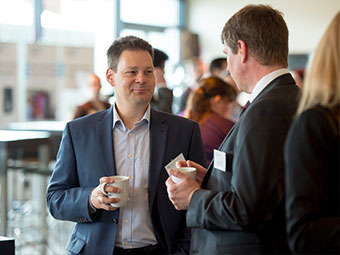
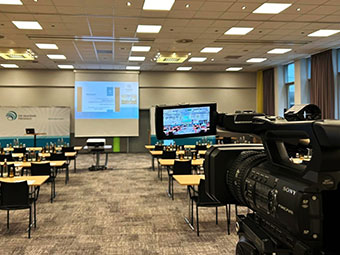
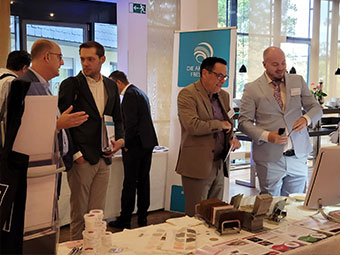
Representatives from the industry, the authorities as well as from the medical and scientific fields are presenting the most pressing questions on food allergens at this conference: How to deal with consumer safety and clinical aspects, regulatory aspects and scientific matters, industry practice and analytical approaches.
The 9th International Conference builds directly on the work of the FAO/WHO Expert Consultation on Risk Assessment of Allergens. Based on the Reference Doses developed for priority allergens, the conference now focuses on how these values can be put into practice – in particular, how Precautionary Allergen Labelling (PAL) can be refined and harmonised.
A key topic of the conference is the role of the Codex Committee on Methods of Analysis and Sampling (CCMAS), currently working to identify, validate and standardise suitable analytical methods.
At the same time, experts are looking ahead: New protein sources are increasingly coming into focus – such as existing proteins modified through innovative processing, or novel protein carriers used as substitutes or additives in food production. The conference addresses this trend and explores the challenge of emerging allergens.
In parallel, the Australia and New Zealand Consensus Statement on Best Practice Food Allergen Management 2025 is a pioneering regional standard. This joint statement sets out practical measures for all actors in the supply chain to minimise risks along the entire value chain.
The conference brings together representatives from regulatory and industry backgrounds, as well as political decision-makers. It keeps track of clinical aspects, advances in food analysis and their suitability as well as on recent developments in risk assessment, risk management and communication.
Would you instead prefer to join on-site in Mainz? Then you can find further information here.
Advances in immunotherapy
Risk assessment: Understanding allergen risks
From science to policy
Analytics and harmonisation: Data for risk-based decisions
Gluten and allergen testing: Thresholds, methods, regulation
Global perspective: Aligning allergen management
From theory to practice
Novel foods and emerging risks
What our participants think about this event:
Professionals working in the fields of:
Sectors taking part:
Picture Credit: © incomible – istock
Timings are in Central European Time CET.
Bert Pöpping, FOCOS, Germany and Food Orbit, Portugal
Alexandra Santos, King’s College London, UK
Cristiano Garino, German Federal Institute for Risk Assessment (BfR), Germany
Nikki Emmerik, Ministry of Health, Welfare and Sport, The Netherlands
Jan Eliëns, Netherlands Food and Consumer Product Safety Authority (NVWA), The Netherlands
Elena Cubero Leon, European Commission Joint Research Centre (JRC), Belgium
Aurélie Hanin and Piyush Kumar Jha, Actalia, France
Sabrina Geisslitz, Leibnitz Institute for Food Systems Biology at the Technical University of Munich (TUM), Germany
Izaskun Martín Cabrejas, Complutense University of Madrid, Spain
Managing gluten in food goes beyond individual test methods and affects regulation, industry, labs, and retailers. Codex discussions highlight the risk of method lists being treated as standards and explore defining minimum performance requirements for gluten testing. This approach could encourage innovation, ensure fair competition, and focus on test suitability rather than the test name.
Bert Pöpping, FOCOS, Germany and Food Orbit, Portugal
Simon Brooke-Taylor, Independent Consultant, Australia (virtual)
Sofia Morais, Group Regulatory Affairs Director, PURATOS, Belgium
Zoë Shuttlewood, McCormick, UK
Neil Buck, General Mills, Switzerland
Antonio Fernández Dumont, European Food Safety Authority (EFSA), Italy (virtual)
Lara Meixner, Charité Berlin, Germany
Kitty Verhoeckx, Utrecht University, The Netherlands
Folgende Referierende haben bereits zugesagt, weitere folgen in Kürze:
Name
Unternehmen

Katharina Blümchen
Universitymedicine Frankfurt, Germany
Katharina Blümchen is working in the Department of Pediatrics in the Division of Pneumology, Allergology, Infectious Diseases and Gastroenterology at the Universitymedicine Frankfurt, Germany.
mehrweniger
Simon Brooke-Taylor
Independent Consultant, Australia
Simon Brooke-Taylor established Brooke-Taylor & Co in Jan 2001 to provide specialist consultancy services in risk assessment, regulatory affairs, toxicology, food safety and compliance to the food sector. Simon has a BSc in Biochemistry (Toxicology) and PhD in Toxicology and over thirty five years experience in technical and production roles in the food sector. Simon has extensive knowledge of ANZ food standards. Between 1991 – end 2000, he held a variety senior positions with the predecessors of Food Standards Australia New Zealand (the National Food Authority (NFA) and the Australia New Zealand Food Authority (ANZFA)) where he had leading policy and scientific roles in the development of the joint Australia New Zealand Food Standards Code. Simon has also participated extensively in the development of international food standards, including leading the Australian delegation at meetings of Codex committees and serving as rapporteur to the Codex Committee on Food Additives and Contaminants and as a WHO adviser to the Joint FAO/WHO Expert Committee on Food Additives (JECFA). During 2020-22 Simon participated as member of the Ad Hoc FAO/WHO Expert Panel on Risk Assessment of Food Allergens, Meetings 1-5, including chairing meeting 4.
mehrweniger
Neil Buck
General Mills, Switzerland
Neil Buck has spent 25 years within industry, he is Corporate Toxicologist for General Mills, Inc where he provides regulatory toxicology support to the global organisation. His time is split between innovation and technical regulatory affairs focused on chemical and allergen safety of ingredients and contaminants. He is active in various stakeholder fora in both the US and EU on topics relevant to continuously improving consumer protection, including Food Drink Europe, the US Consumer Goods Association, ILSI Europe and the Institute for the Advancement of Food and Nutrition Sciences
mehrweniger
Elena Cubero Leon
European Commission - Joint Research Centre, Institute for Health and Food, Belgium
Elena Cubero Leon is Scientific/Technical Officer at the European Commission’s Joint Research Centre (JRC), where she manages the European Network for Food Allergen Detection Laboratories (ENFADL) and works on harmonising allergen analysis across Europe. She holds a PhD in Biology from the University of Sussex and has over 15 years of experience in food safety and mass spectrometry, combining method development for allergen detection with the organisation of proficiency testing for control laboratories.
mehrweniger
Jan Eliëns
Food and Consumer Product Safety Authority (NVWA), The Netherlands
Nikki Emmerik
Ministry of Health, Welfare and Sport, The Netherlands
Antonio Fernández Dumont
European Food Safety Authority (EFSA), Italy
Antonio Fernández Dumont has been working at the European Food Safety Authority since 2008, where he is a scientist in the GMO Unit focusing on the allergenicity risk assessment and safety evaluation of proteins in genetically modified food and feed. He is co‑author of the 2025 publication “Enhancing allergenicity risk assessment for novel foods in the EU: insights from the updated EFSA guidance – requirements, knowledge gaps and research needs”, reflecting his ongoing work on improving strategies for assessing the safety of novel proteins.
mehrweniger
Cristiano Garino
German Federal Institute for Risk Assessment (BfR), Germany
Cristiano Garino is a Molecular Biologist at the German Federal Institute for Risk Assessment (BfR), specialising in food safety and allergen research. He has over 15 years of experience in the development of molecular and proteomic methods for the detection, characterisation and risk assessment of food allergens, including novel foods such as insects.
mehrweniger
Sabrina Geisslitz
Leibnitz Institute for Food Systems Biology at the Technical University of Munich (TUM), Germany
Sabrina Geisslitz is a researcher at the Leibniz Institute for Food Systems Biology at the Technical University of Munich (TUM), Germany, specializing in proteomics-based analysis of celiac disease–active peptides in food products containing partially hydrolyzed gluten. Her work focuses on advanced mass spectrometry approaches to assess gluten degradation, immunogenicity, and food safety for individuals with celiac disease.
mehrweniger
Aurélie Hanin
Actalia, France
Aurélie Hanin has been Head of the Microbiology, Hygiene and Processing Department at ACTALIA since April 2022, where she leads activities focused on improving food microbiological quality through process control, decontamination technologies, and advanced analytical tools. She has been with ACTALIA for over 12 years, holding successive roles as Project Manager and R&D Engineer in microbiology and molecular biology.
mehrweniger
Piyush Kumar JHA
Actalia, France
Piyush Kumar JHA has been Project Manager for Process and Hygienic Design in the food industry at ACTALIA since July 2024, where he leads workshops and projects focused on hygienic design, food contact surfaces, and advanced processing solutions. He brings strong expertise in process and bioprocess engineering, innovative crystallization and freezing technologies, and applied physical fields, built through prior roles at CNRS, INRAE, and Oniris Nantes.
mehrweniger
Izaskun Martín-Cabrejas
Complutense University of Madrid, Spain
Izaskun Martín-Cabrejas holds a Ph.D. in Food Saftey, with 13 years of experience across academia, research, industry, and public health. She is currently an Assistant Professor at the Complutense University of Madrid, with a strong research record in food safety, probiotics, and celiac disease, including 16 JCR publications and extensive teaching and supervision experience.
mehrweniger
Lara Meixner
Charité - Universitätsmedizin Berlin, Germany
Lara Meixner is a research scientist at the Charité – Universitätsmedizin Berlin, specialising in pediatric allergy and immunology. Her work focuses on early childhood nutrition, food allergy prevention, and the clinical assessment of emerging allergens. She has published extensively on strategies to reduce the risk of food allergies and improve pediatric dietary guidance.
mehrwenigerSofia Morais
PURATOS, Belgium

Bert Pöpping
FOCOS, Germany and Food Orbit, Portugal
Bert Pöpping is the Managing Director of the strategic food consulting company FOCOS in Germany and Co-Founder and Senior Scientific Expert of the regulatory and compliance company Food Orbit in Portugal. He has more than 25 years of experience in food safety and strategic advice for companies in the food supply chain. He is one of the experts on the joint FAO/WHO Expert Consultation on Risk Assessment of Food Allergens. Bert has published more than 75 publications on food allergens, food fraud, food safety and food regulations. He also serves as an expert on the US Pharmacopeia Food Chemical Codex group dealing with food ingredients.
mehrwenigerAlexandra Santos
King's College London, UK
Alexandra Santos is Full Professor of Paediatric Allergy at King’s College London and Honorary Consultant in Paediatric Allergy at Evelina London Children’s Hospital, where she also leads research on food allergy diagnosis and mechanisms. She trained in Medicine at the University of Coimbra, specialised in Allergy and Clinical Immunology, and earned a PhD at King’s College London, and now combines clinical care with translational research while holding major leadership roles within EAACI.
mehrweniger
Zoë Shuttlewood
McCormick, UK
Zoë Shuttlewood has been Director, Product Integrity and Risk Management at McCormick & Company since July 2024, where she leads global food safety, risk assessment, and product integrity programmes. She has spent over 15 years at McCormick, previously serving as Senior Manager, Global Food Integrity and Risk and EMEA Food Safety & Quality Systems Lead, building deep expertise in HACCP, risk management, and food fraud prevention. She is Vice Chair of the Food and Drink Federation (FDF) Allergen Steering Group and represents McCormick in the Food Allergy Research & Resource Programme (FARRP).
mehrweniger
Kitty Verhoeckx
Utrecht University, The Netherlands
Kitty Verhoeckx is an Analytical Chemist and an Assistant Professor at the Dermatology and Allergology Department of the University Medical Center Utrecht (UMCU) in the Netherlands. In 1991 she started her career at TNO, where she had various research positions and was involved in various research topics, systems biology, bioactive lipids, etc. In 2005 she gained her PhD degree at the University of Leiden. Since 2011, Kitty Verhoeckx is involved in food allergy projects. She was a management committee member of the COST Action INFOGEST, participated in the ILSI Europe task force ‘Allergenicity and processing’, ILSI Europe FA Expert Group “Allergenicity’’, the EFSA Focus group on allergenicity assessment, and EFSA focus groups on food allergy and digestion. She was the Chair of the COST Action ImpARAS. Currently, she coordinates the Marie Curie DN ALLPreT (ALLergenicity Prediction Toolbox) and the Dutch project MoSIN (Monitoring the Safe Introduction of Novel foods).
mehrwenigerTeilnahmepreis: € 1.195,00 zzgl. MwSt.
Im Teilnahmepreis sind folgende Leistungen enthalten:
Vertreter:innen einer Behörde oder einer öffentlichen Hochschule erhalten einen ermäßigten Teilnahmepreis von € 695,00 zzgl. MwSt. (Nachweis per Fax oder E-Mail erforderlich). Der Sonderpreis ist nicht mit anderen Rabatten kombinierbar.
Gruppenrabatt
Bei gemeinsamer Anmeldung aus einem Unternehmen erhalten die dritte und jede weitere Person 15 % Rabatt.
Buchen ohne Risiko
Die Teilnahme an unseren Online-Veranstaltungen können Sie bis zu 1 Woche vor Veranstaltungsbeginn kostenfrei und ohne Angabe von Gründen schriftlich stornieren. Bei späteren Stornierungen sowie bei Nicht-Login zur Online-Veranstaltung können keine Teilnahmegebühren erstattet werden.
Sie erhalten jedoch in diesem Fall von uns nach der Veranstaltung Zugang zu den Dokumentationsunterlagen.
Eine Ersatzperson können Sie jederzeit kostenfrei benennen.
Wären Sie gern dabei gewesen, sind jedoch zeitlich verhindert?
Zum Preis von 295,00 € zzgl. MwSt. können Sie alle Vorträge als pdf zum Download bestellen. Sie erhalten dann einige Tage nach der Veranstaltung die Zugangsdaten zum Downloadbereich unserer Website. Dort finden Sie alle Vorträge in digitaler Form (die Zustimmung der Referent:innen vorausgesetzt) und in der aktuellsten Version.

Sabine Mummenbrauer
Inhalt und Konzeption
+49 231 75896-82
smummenbrauer@akademie-fresenius.de
Sabine Mummenbrauer
Inhalt und Konzeption
+49 231 75896-82
smummenbrauer@akademie-fresenius.de
Sabine Mummenbrauer
Inhalt und Konzeption
+49 231 75896-82
smummenbrauer@akademie-fresenius.de
Alexandra Schardt
Organisation und Teilnehmermanagement
+49 231 75896-74
aschardt@akademie-fresenius.de
Alexandra Schardt
Organisation und Teilnehmermanagement
+49 231 75896-74
aschardt@akademie-fresenius.de
Präsentieren Sie Ihr Unternehmen auf unserer Veranstaltung.
Persönlich und zielgruppengenau stellen Sie Ihre Produkte und Dienstleistungen vor. Gerne informieren wir Sie unverbindlich über die verschiedenen Möglichkeiten – von der Auslage von Produktinformationen bis hin zum Ausstellungsstand.
Gerne beraten wir Sie persönlich:

Monika Stratmann
Telefon: +49 231 75896-48
info@akademie-fresenius.de
Wir bieten Journalist:innen und Redakteur:innen eine Plattform, um in Kontakt mit Expert:innen zu treten.
Wenn Sie als Redakteur:in der Fachpresse Interesse an einem Pressepass oder einer Medienpartnerschaft haben, kontaktieren Sie uns bitte frühzeitig. Wir beraten Sie gerne.
Sprechen Sie uns an:

Katharina Geraridis
Telefon: +49 231 75896-67
presse@akademie-fresenius.de


Zertifiziert nach DIN EN ISO 9001 und DIN EN ISO 50001

Infos zu unseren aktuellen Veranstaltungen anfordern:
© Die Akademie Fresenius GmbH