The conference focuses on providing the latest developments and implications in the assessment and regulation of genotoxic compounds and is designed to meet the diverse needs of various industries. It will cover a wide range of topics including test methods, guidelines, and the modelling and prediction of genotoxicity.
This compact conference on genotoxic compounds offers a unique platform for interaction among regulatory, industrial, and scientific professionals. It focuses on agrochemicals, chemicals, biocides, cosmetics, pharmaceuticals, food, feed, and food contact materials. Attendees can expect to gain valuable insights into the latest advancements in regulation, quantitative risk assessment, test methods and guidelines. They will understand the implications for their specific industries, and learn about modelling and prediction. This event promises to be a crucial opportunity to stay informed and updated in this rapidly evolving field.
Regulatory developments and policy direction
From hazard to risk: Quantitative approaches
NAMs and mechanistic tools
Integrated testing strategies
In silico approaches and data integration
Professionals working in the fields of:
Sectors that should take part:
Picture Credit: © Sashkin – Fotolia.com
PLEASE NOTE: The indicated times refer to Central European Time CET.
For further time zones, please view here.
All presentation slots include dedicated time for questions and discussion, moderated by the Chairs.
Krista Meurer, BASF, Germany
Carsten Kneuer, German Federal Institute for Risk Assessment (BfR), Germany
Raffaella Corvi, European Commission Joint Research Centre (JRC), Italy
Birgit Mertens, Sciensano, Belgium
Cecilia Bossa, Italian National Institute of Health (ISS), Italy
Paul A. White, Health Canada, Canada
Stephanie Smith-Roe, National Institute of Environmental Health Sciences (NIEHS), USA (invited)
Carole Yauk, University of Ottawa, Canada
Stefan Pfuhler, Procter & Gamble, USA
PLEASE NOTE: The indicated times refer to Central European Time CET.
For further time zones, please view here.
Azeddine Elhajouji, Norvatis Pharma, Switzerland (invited)
Nathalie Delrue, Organisation for Economic Co-operation and Development (OECD), France
Carol Beevers, Corteva Agriscience, United Kingdom
Hind Assaf Vandecasteele, L’Oreal, France
Juan Parra Morte, European Food Safety Authority (EFSA, Italy
Folgende Referierende haben bereits zugesagt, weitere folgen in Kürze:
Name
Unternehmen

Hind Assaf Vandecasteele
L'Oréal, France
Hind Assaf Vandecasteele is a Regulatory Toxicologist at L’Oréal Research & Innovation, where she supports the toxicological risk assessment and safety evaluation of cosmetic raw materials and products. She holds a PhD in Toxicology from Université Paris-Sud and a Doctorate in Pharmacy from Université Saint-Joseph de Beyrouth. Her work focuses on next-generation risk assessment and the application of New Approach Methodologies (NAMs) in a regulatory context, and she contributes to collaborative scientific initiatives, including activities within the ICCS International Collaboration on Cosmetics Safety.
mehrweniger
Carol Beevers
Corteva Agriscience, UK
Carol Beevers is a Regulatory Toxicologist, specialising in genetic toxicology. After gaining a degree in Microbiology and a PhD in Bacterial Genetics, Carol joined the Genetic Toxicology department at Covance Laboratories (now Labcorp) as an in vitro and in vivo Study Director. After almost 20 years in contract research, she moved to consultancy, first in the Human Health Toxicology group at Exponent International and then the Toxicology Group at Broughton Life Sciences. More recently, Carol has joined the toxicology team at Corteva Agriscience. Carol has worked across a variety of industry areas including pharmaceuticals, agrochemicals, food and food contact materials, and industrial chemicals, where she has specialised in genetic toxicology risk and mode of action assessments. Since 2015 she has been a member of the UK Committee on Mutagenicity of Chemicals in Food, Consumer Products, and the Environment. She is also a member of the OECD Expert Groups for the guidelines on the transgenic rodent gene mutation assay and the comet assay, the Health and Environmental Sciences Institute Genetic Toxicology Testing Committee and the International Workshops on Genotoxicity Testing.
mehrwenigerCecilia Bossa
Italian National Institute of Health - ISS, Italy
Melanie K. Bothe
Fresenius Kabi Deutschland, Germany
Raffaella Corvi
European Commission Joint Research Centre, Italy
Raffaella Corvi has a PhD in Biological Sciences and has been working at the Joint Research Centre of the European Commission since 2001 where she established the activities in the area of genotoxicity and carcinogenicity. In 2003 she was seconded to the OECD Test Guideline Programme in Paris. Currently, she conducts activities that evaluate innovative and integrated approaches to assess chemical safety across sectors and support their regulatory implementation, while also promoting the 3Rs across multiple regulatory sectors. She is currently leading a working group for the revision of germ cell mutagenicity classification criteria at the UN Globally Harmonized System of Classification and Labelling of Chemicals (GHS) and is a member of several European and international committees (e.g. co-chair of the European Partnership for Alternative Approaches to Animal testing (EPAA) project platform, OECD expert groups, HESI Genetic Toxicology Technical Committee, etc.).
mehrweniger
Nathalie Delrue
Organisation for Economic Co-operation and Development (OECD), France
Nathalie Delrue joined the OECD Secretariat in 2006 and is an Administrator of the OECD Test Guidelines Programme. She coordinates the development and revision of Test Guidelines and related documents for human-health endpoints, including genotoxicity and carcinogenicity, and has been closely involved in OECD activities to develop and update genotoxicity test methods.
mehrweniger
Carsten Kneuer
German Federal Institute for Risk Assessment (BfR), Germany
Carsten Kneuer is a Toxicologist and the Head of the Unit “Toxicology of Active Substances and their Metabolites“ in the Pesticides Safety Department of the German Federal Institute for Risk Assessment. His group is evaluating the mammalian toxicology of pesticides within the EU assessment framework and is actively involved in various projects aimed at the advancement of our risk assessment practice.
mehrweniger
Birgit Mertens
Sciensano, Belgium
Birgit Mertens obtained her Master in Pharmaceutical Sciences and PhD in Neuropharmacology from the Vrije Universiteit Brussel in Belgium. She joined Sciensano in 2010 and is currently a Senior Toxicologist and team leader of the Risk and Health Impact Assessment Service. She coordinates and participates in multiple (inter)national research projects and activities on the genotoxicity of physical and chemical agents, focusing on food contaminants and developing and applying new approach methodologies. She is the National Coordinator of the Test Methods Programme both at the European and OECD level and the Belgian contact point for the Preliminary Assessment of the Regulatory Relevance of Alternative Methods (PARERE) network. She is also a member of the OECD genotoxicity expert group. She participates in different (inter)national working groups and scientific committees on hazard and risk assessment and is the current president of the Belgian Environmental Mutagenesis Society.
mehrweniger
Krista Meurer
BASF, Germany
Krista Meurer has been a Regulatory Toxicologist for Crop Protection at BASF since 2008. In support of European and global registrations, she is responsible for human health risk assessment for pesticide products and active substances. Based on 10 years experience as a Study Director in contract research, Krista has a special interest in genetic toxicology testing and is a co-chair of the CropLife Europe genotoxicity expert group as well as member of the Health and Environmental Sciences Institute (HESI) Genetic Technical Committee (GTTC).
mehrweniger
Juan Parra Morte
European Food Safety Authority (EFSA), Italy
Juan Parra Morte has been Toxicologist in the Pesticide Peer Review Unit of EFSA since 2008. He has been actively involved in the assessment of pesticide active substances, their metabolites and impurities, including the EFSA PPR, the OECD Guidance on Residue Definition and EFSA's outsourced projects on the Genotoxicity Database and QSAR and Read-Across for the genotoxicity of metabolites. He is chairing the EFSA Working Group on NAMs QSARs.
mehrweniger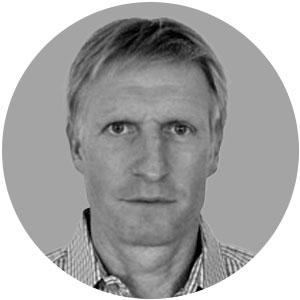
Stefan Pfuhler
Procter & Gamble, USA
Stefan Pfuhler is employed by Procter & Gamble, USA, and serves as their Global Genotoxicity Expert with 25 years of Product Safety experience in the consumer goods industry. Within that role, he manages genotoxicity issues for P&G products and ingredients, develops and supports testing strategies and policies across the company, leads the P&G Genotoxicity Expert Team and research program, targeting improved in vitro assays and avoidance of animal testing.
mehrweniger
Paul A. White
Health Canada, Canada
Paul A. White obtained his BSc in microbiology and immunology, and PhD in environmental toxicology, from McGill University in Montreal. He conducted post-doctoral research at US EPA facilities in Rhode Island and North Carolina; investigating the mutagenic hazards of municipal wastewaters. He joined Health Canada in 1999 and is currently a senior research scientist in the Environmental Health Science and Research Bureau. In 2002 he was appointed Professor of Chemical and Environmental Toxicology in the Department of Biology at the University of Ottawa. His current work investigates the mutagenic and carcinogenic hazards of complex mixtures, the design and validation of in vitro tools for genetic toxicity assessment, the use of molecular biomarkers for mutagen exposure assessment, and the application of quantitative methods for interpretation of genetic toxicity dose-response data. He has published over 140 peer-reviewed papers, and his work has been cited over 8000 times. He currently serves on the editorial boards of Environmental and Molecular Mutagenesis, Mutation Research Reviews, Genes and Environment, and Food and Chemical Toxicology, and he is currently the vice-president of the International Association of Environmental Mutagenesis and Genomics Societies (IAEMGS).
mehrweniger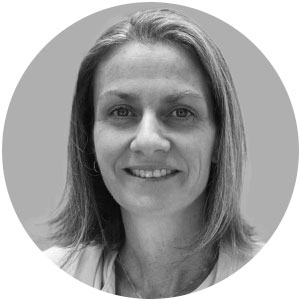
Carole Yauk
University of Ottawa, Canada
Carole Yauk was the lead scientist of the Genomics Laboratory in the Environmental Health Science and Research Bureau at Health Canada for 18 years. She joined the University of Ottawa’s Department of Biology as a professor in September 2020, where she holds the Tier 1 Canada Research Chair in Genomics and the Environment. Her research broadly focuses on multi-sector collaborative efforts to develop and implement genomic tools for human health risk assessment of environmental chemical exposures. She is involved in various international consortia to advance this area, including within the Health and Environmental Sciences Institute (a global non-profit), where she currently serves as Chair of the Board of Trustees. She is a Canadian Delegate to the Organisation for Economic Co-operation and Development (OECD), participating in the Advisory Group on Emerging Science in Chemicals Assessment. She is Past-President of the Environmental Mutagenesis and Genomics Society and an editorial board member of several journals focused on mutagenesis and genetic toxicology.
mehrwenigerTeilnahmepreis: € 1.095,00 zzgl. MwSt.
Im Teilnahmepreis sind folgende Leistungen enthalten:
Vertreter:innen einer Behörde oder einer öffentlichen Hochschule erhalten einen ermäßigten Teilnahmepreis von € 595,00 zzgl. MwSt. (Nachweis per Fax oder E-Mail erforderlich). Der Sonderpreis ist nicht mit anderen Rabatten kombinierbar.
Gruppenrabatt
Bei gemeinsamer Anmeldung aus einem Unternehmen erhalten die dritte und jede weitere Person 15 % Rabatt.
Buchen ohne Risiko
Die Teilnahme an unseren Online-Veranstaltungen können Sie bis zu 1 Woche vor Veranstaltungsbeginn kostenfrei und ohne Angabe von Gründen schriftlich stornieren. Bei späteren Stornierungen sowie bei Nicht-Login zur Online-Veranstaltung können keine Teilnahmegebühren erstattet werden.
Sie erhalten jedoch in diesem Fall von uns nach der Veranstaltung Zugang zu den Dokumentationsunterlagen.
Eine Ersatzperson können Sie jederzeit kostenfrei benennen.
Wären Sie gern dabei gewesen, sind jedoch zeitlich verhindert?
Zum Preis von 295,00 € zzgl. MwSt. können Sie alle Vorträge als pdf zum Download bestellen. Sie erhalten dann einige Tage nach der Veranstaltung die Zugangsdaten zum Downloadbereich unserer Website. Dort finden Sie alle Vorträge in digitaler Form (die Zustimmung der Referent:innen vorausgesetzt) und in der aktuellsten Version.
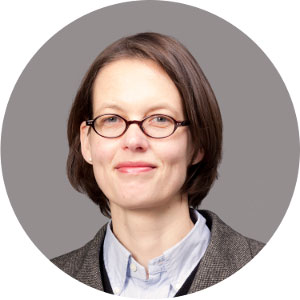
Sabine Mummenbrauer
Inhalt und Konzeption
+49 231 75896-82
smummenbrauer@akademie-fresenius.de
Sabine Mummenbrauer
Inhalt und Konzeption
+49 231 75896-82
smummenbrauer@akademie-fresenius.de
Sabine Mummenbrauer
Inhalt und Konzeption
+49 231 75896-82
smummenbrauer@akademie-fresenius.de
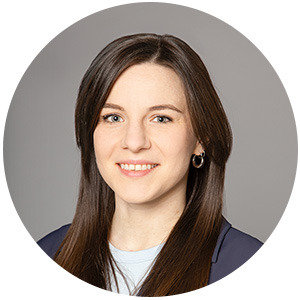
Alexandra Schardt
Organisation und Teilnehmermanagement
+49 231 75896-74
aschardt@akademie-fresenius.de
Alexandra Schardt
Organisation und Teilnehmermanagement
+49 231 75896-74
aschardt@akademie-fresenius.de
Präsentieren Sie Ihr Unternehmen auf unserer Veranstaltung.
Persönlich und zielgruppengenau stellen Sie Ihre Produkte und Dienstleistungen vor. Gerne informieren wir Sie unverbindlich über die verschiedenen Möglichkeiten – von der Auslage von Produktinformationen bis hin zum Ausstellungsstand.
Gerne beraten wir Sie persönlich:
Monika Stratmann
Telefon: +49 231 75896-48
info@akademie-fresenius.de
Wir bieten Journalist:innen und Redakteur:innen eine Plattform, um in Kontakt mit Expert:innen zu treten.
Wenn Sie als Redakteur:in der Fachpresse Interesse an einem Pressepass oder einer Medienpartnerschaft haben, kontaktieren Sie uns bitte frühzeitig. Wir beraten Sie gerne.
Sprechen Sie uns an:

Katharina Geraridis
Telefon: +49 231 75896-67
presse@akademie-fresenius.de


Zertifiziert nach DIN EN ISO 9001 und DIN EN ISO 50001

Infos zu unseren aktuellen Veranstaltungen anfordern:
© Die Akademie Fresenius GmbH